
In today’s fast-paced digital world, from MVP to Scale launching a Minimum Viable Product (MVP) is no longer just a startup tactic in today’s fast-paced digital landscape; it’s a wise move for companies of all sizes. However, what distinguishes a scalable success from a one-hit wonder? How well you develop and iterate your product will determine the answer.
Iqonic Tech has assisted in converting MVPs into complete, profitable platforms. We are aware that success doesn’t end with the release of a mobile app, web platform, or AI-powered tool. That’s where it begins.
Why Begin with an MVP?
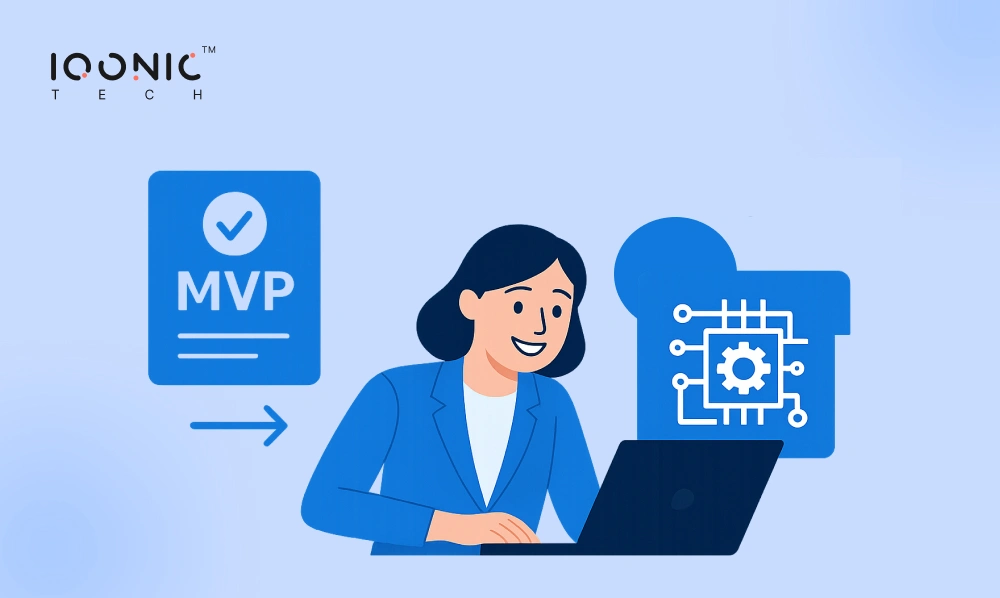
An MVP is more than just a simplified version of your finished product; it’s a means to test concepts, draw in early adopters, and collect information without spending a lot of money.
Fact Check :According to CB Insights, 42% of startups fail because there’s no market need. An MVP helps you avoid that pitfall by giving you real-world feedback, fast.
Here’s what an MVP should do:
- Solve one core problem
- Offer basic, functional features
- Allow user testing and feedback
- Be scalable from day one
Iteration: The Key to Growing
The MVP is only the first step. The real work – iteration begins once it is on the market.
Step 1: Listen to Your Users
Pay Attention to User Input User feedback is invaluable. Get as much user information as you can after launching your MVP, including ratings, session durations, drop-off locations, and reviews. Real-time tracking of user behavior can be facilitated by tools such as Google Analytics, Hotjar, or Mixpanel. Products that made an early pivot based on user feedback have a 33% higher retention rate.
Step 2: Give Important Features Priority
Don’t attempt to construct everything at once. Pay attention to features that have a big impact and improve the user experience.
- Improved onboarding can increase user activation by 20-30%
- Adding personalization can boost engagement by up to 50%
Step 3: Performance Optimization
Performance becomes crucial as you grow. A slow app is not what anyone wants. Reduce API calls, improve loading times, and take cloud scalability into account early on.
Scaling Smart with Custom Tech
Adding features and strategically scaling are two very different things. Scaling entails accommodating more users without experiencing any issues.
- Supporting more users without breaking
- Offering seamless UX across devices
- Ensuring data security and compliance
- Preparing infrastructure for growth
Custom software allows you to build exactly what your business needs (nothing more, nothing less). It’s flexible, secure, and adaptable to changing market needs.
At Iqonic Tech, we leverage:
- Fast and flexible Methodology to stay lean and iterative
- Modular Architecture for easy upgrades
- AI & Automation to reduce manual work and boost efficiency
Common Pitfalls to Avoid When Scaling
- Premature Scaling: Adding too many features too soon can overwhelm users and your team.
- Ignoring Tech Debt: Quick fixes may work early on, but they’ll slow you down later.
- Lack of TestingAs you grow, bugs multiply. Automated testing is your best friend.
- One-Size-Fits-All Mindset: Every business is unique. Off-the-shelf solutions don’t scale like custom tech does.
Real Impact Comes From Smart Iteration
Scaling is not a destination; it’s a continuous process of learning, refining, and adapting. From launching MVPs to powering millions of daily transactions, we’ve seen the difference that strategic tech iteration makes.
Numbers don’t lie:
- MVPs with regular updates see 60% more engagement
- Custom solutions reduce churn by upto 40%
- Companies that iterate based on analytics scale 2x faster
At Iqonic Tech, we don’t just build software, we build growth engines.
What Comes After Scaling? Sustaining Growth & Innovation
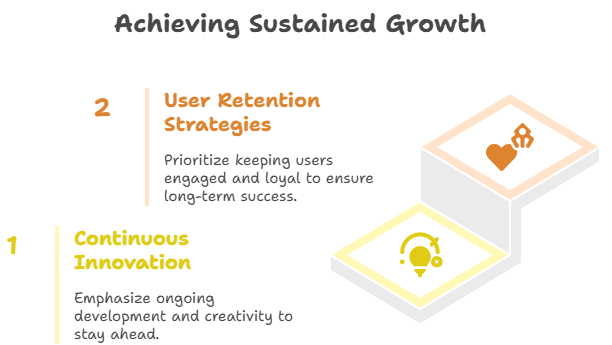
1. Focus on Continuous Innovation
Markets evolve, and so should your product. Introduce new features based on ongoing trends, user feedback, and competitor movement.
- Use A/B testing to validate new ideas
- Monitor tech trends (e.g., AI, personalization, automation)
- Stay agile and open to experimentation
2. Strengthen User Retention Strategies
Now that you’ve grown your user base, it’s time to build loyalty.
- Introduce loyalty programs or referral incentives
- Use push notifications and personalized content
- Offer stellar customer support and onboarding
Loyal users = more revenue + free word-of-mouth marketing.
Final Thoughts
The path from MVP to scale is a continuous cycle of learning, development, and improvement rather than a straight line. The secret is to build intelligently, not just quickly. You have the ability to scale and the flexibility to adjust with custom technology.
Iqonic Tech is your progress partner, whether you’re launching your first MVP or reaching your next growth milestone. Together, let’s create something significant.
Ready to scale your MVP? Feel free to book a free demo call with our Team Iqonic. No pressure, just a friendly chat to explore your vision and how we can support it.