
Understanding Software Project Budget Overruns
Software projects are well known for exceeding their original budgets. For business owners, a software project budget is more than a financial estimate, it is a strategic commitment tied to growth, efficiency, and competitive advantage. When budget overruns occur, they do not just increase software development costs; they disturb timelines, powerful internal resources, and often force difficult compromises on quality or features.
Budget overruns in software development typically occur when initial project cost assumptions fail to align with real-world execution. Unlike fixed manufacturing costs, software projects develop continuously, making cost control both critical and challenging.
Why Software Projects Often Go Over Budget

Understanding why cost surges occur in custom software development projects is the first step toward preventing them. While every project is unique, most budget issues originate from a predictable set of underlying causes.
Complexity of Software Development
Modern software systems are rarely simple. Even seemingly straightforward applications often require integrations, security layers, scalability planning, and compliance considerations. This essential software complexity expands project scope beyond what many business owners initially anticipate.
As project scope grows, budget estimation becomes increasingly difficult. Each added feature, integration, or workflow introduces satellites that can ripple across timelines and costs. Without accounting for this complexity upfront, project budgets are almost guaranteed to fall short.
Inaccurate Cost Estimation
Inaccurate cost estimation is one of the most common project budget errors. Early estimates are often created with limited technical detail, optimistic assumptions, or pressure to meet internal approval doorway.
When software cost estimation fails to include realistic development effort, testing, deployment, and post-launch support, budget planning becomes disconnected from reality. These early mistakes often surface midway through development, when correction is most expensive.
Scope Creep in Software Projects
Scope creep refers to unplanned changes or additions to a software project after development has begun. While each change may appear minor, their increasing budget impact can be significant.
Without clear controls around software project changes, scope creep quietly increases development time, testing requirements, and resource usage, pushing projects well behind their original cost boundaries.
Key Statistics on Software Project Overruns
Industry data consistently highlights how general budget overruns in software projects have become. Studies across IT and digital transformation initiatives show that a significant percentage of projects exceed initial budgets, with some doubling original estimates.
These software project statistics underscore an important reality: budget overruns are rarely caused by a single failure. Instead, they result from a combination of planning gaps, execution missteps, and insufficient cost governance.
Top 10 Mistakes Causing Software Project Budget Overruns
Understanding the most common software project management mistakes helps business owners identify risks early and take corrective action before costs scroll out of control.
1. Inadequate Project Planning
Project planning mistakes often occur when timelines and budgets are defined before requirements are fully understood. Rushed planning leads to indefinite deliverables, unclear dependencies, and unrealistic expectations.
Without a structured planning phase, software project budgets lack the detail required to manage costs effectively throughout development.
2. Inaccurate Cost Estimation
Budget forecasting errors frequently stem from relying on rough estimates rather than data-driven models. Estimation errors compound as projects evolve, making it difficult to track actual versus planned spend.
Accurate software cost estimation requires breaking work into smaller components and validating assumptions with experienced delivery teams.
3. Scope Creep and Changing Requirements
Requirement changes are inevitable, but unmanaged scope creep can derail even well-funded projects. Each change increases development effort, testing complexity, and coordination overhead.
When changes are approved without reassessing project cost impact, budget overruns become unavoidable.
4. Ineffective Risk Management
Risk management is often treated as a theoretical exercise rather than a practical budgeting tool. Budget risks such as technical debt, third-party dependencies, or staffing gaps are frequently underestimated.
Without proactive risk mitigation strategies, unexpected issues quickly translate into unplanned costs.
5. Poor Communication Across Teams
Communication breakdowns between business stakeholders, developers, and vendors lead to misaligned expectations. Rework caused by misunderstandings directly increases development costs.
Strong project collaboration practices reduce budget errors by ensuring everyone works toward the same objectives.
6. Unrealistic Timelines and Sprint Planning
Compressed deadlines often force teams to work inefficiently or skip essential steps like testing. Agile planning mistakes, such as overcommitting sprints, create hidden costs that surface later.
Unrealistic software project deadlines increase the likelihood of burnout, defects, and budget overruns.
7. Ignoring Historical Project Data
Past project lessons are invaluable for improving budget accuracy. Organizations that fail to analyze previous software cost lessons repeat the same estimation and planning mistakes.
Historical data provides realistic benchmarks for effort, timelines, and risk exposure.
8. Inadequate Testing and Quality Assurance
Cutting QA budgets may appear to save money initially, but software bugs are far more expensive to fix after deployment. Testing budget reductions often result in higher long-term costs.
In-depth quality assurance protects both budget and brand reputation.
9. Inflexible Budgeting Practices
Fixed budget planning leaves little room to respond to change. Software projects require adaptive budgeting to accommodate evolving requirements and technical discoveries.
Flexible budget frameworks allow for controlled adjustments without triggering overruns.
10. Over-reliance on In-House Development Without Planning
In-house development can reduce dependency on external vendors, but without proper planning, it introduces hidden costs related to hiring, training, and capacity constraints.
Effective project cost planning balances internal resources with external expertise.
How to Prevent Budget Overruns in Software Projects

Preventing budget overruns requires shifting from reactive cost control to proactive software project management.
Accurate Cost Estimation and Planning
Using structured cost estimation tools and detailed work breakdowns improves project budget accuracy. Business owners should demand transparency around assumptions, risks, and contingencies.
Effective Scope and Risk Management
Clear scope management processes ensure that changes are evaluated for cost and timeline impact before approval. Risk mitigation strategies should be integrated into budget planning from the start.
Transparent Communication and Collaboration
Regular updates, shared dashboards, and clear documentation keep all stakeholders aligned. Strong communication reduces costly misunderstandings and rework.
Continuous Monitoring and Reporting
Tracking project KPIs and budget performance in real time enables early intervention. Continuous monitoring transforms cost control from a periodic review into an ongoing discipline.
Tools to Control Software Project Budgets
Technology plays a crucial role in managing software development costs. Budget management tools provide visibility, predictability, and accountability.
Introducing Software Development Cost Calculator
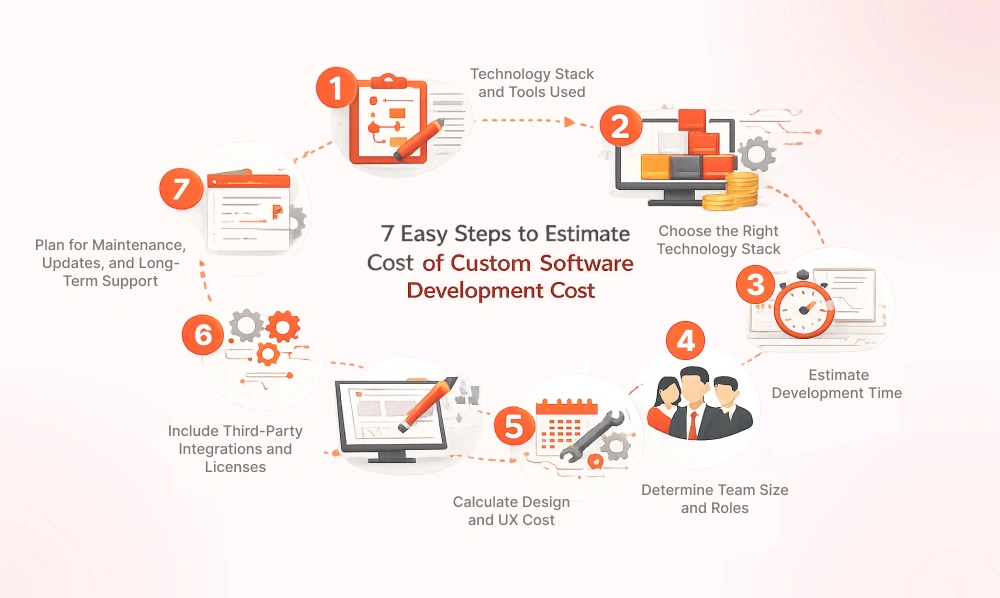
A software development cost calculator helps business owners estimate project costs based on features, complexity, and delivery models. It provides a structured approach to budget prediction and project cost planning.
Benefits of Using a Cost Calculator
Cost calculators support accurate budget planning, reduce project overruns, and enable informed decision-making before development begins. They also improve alignment between business goals and technical execution.
Conclusion
Software project success depends as much on budget control as on technical execution. By understanding common cost overrun causes and adopting proactive planning, communication, and monitoring practices, business owners can significantly reduce financial risk.
Effective budget management transforms software development from a cost center into a strategic investment that delivers long-term value.
FAQs
What are software project budget overruns and why do they happen?
Software project budget overruns occur when actual costs exceed planned budgets, often due to poor estimation, scope creep, and inadequate risk management.
Can scope creep affect my software project buHow dget?
Uncontrolled scope creep increases development effort, testing needs, and timelines, directly driving up project costs.
How do I estimate software project costs accurately?
Accurate estimation requires detailed requirements, historical data, risk assessment, and the use of structured cost estimation tools.
What role does risk management play in preventing budget overruns?
Risk management identifies potential cost drivers early and allocates contingency budgets to address them proactively.
What tools can help manage software project budgets effectively?
Budget tracking software, project management tools, and software development cost calculators provide real-time visibility and control.
How does a software development cost calculator help prevent overruns?
It enables realistic budget prediction before development starts, helping business owners align scope, timelines, and investment expectations.